God’s Kingdom on Earth

There are so many problems that we face in life – at a global, regional and a personal level. Different problems within each context, and each of us faces different difficulties in our lives.

God created the earth to be inhabited – He created it to reflect his glory and that includes the creation of plant, animal and human life – we were created to reflect the glory of God in His Kingdom.

Many people think that God’s Kingdom will be in heaven, but that’s not what the Bible teaches. We can see from the Lord’s prayer that Jesus taught us to pray ‘Your kingdom come, your will be done, on earth as it is in heaven’. It is a heavenly kingdom because it is God’s Kingdom and Jesus will be the King over it – on the earth.

Everything will be made perfect and new. This will mean an end not only to all the problems people cause but to all sadness, suffering, pain and even death.

This time is coming soon, it is the good news we can read about in the ‘Sermon on the Mount.’ (Matthew chapters 5-7). In this Biblical passage, Jesus speaks about what God wants from people and we can build a mental picture of what effect this would have on our lives.

Romans 14:17 says “the kingdom of God is not eating and drinking, but righteousness and peace and joy in the Holy Spirit.” This tells us that the Kingdom will be defined by these positive characteristics rather than focusing on the physical attributes that concern us in this life.

The invitation to this kingdom is open to all, God wants everyone to be there. Respond to His invitation, believe, repent, be baptised and try to live now as we all will in that kingdom.

Take a look at our presentation on this subject on our YouTube channel: https://www.youtube.com/watch?v=1ow8wPdgGEw

Are the Gospels Reliable?

One way to answer this question is to look at the language in which they were written. Languages vary from place to place and from time to time, and by looking at the language we can discover when and where the material in the Gospels began. The Gospels were written in Koine Greek, used in the eastern Mediterranean in the first century AD. However, the Greek used in the Gospels contains linguistic features which indicate that the speech within them came from people who often thought in Hebrew or Aramaic.

These ‘linguistic fossils’ are consistent with the idea that the accounts in the Gospels come from Palestine at the time of Jesus, and not from a gentile church, although they were written for a Greek-speaking readership.

This indicates that the accounts are close to the events of the ministry of Jesus, and not church-inspired fiction.

The presence of the linguistic fossils also shows that they have been copied reliably by Greek scribes over the centuries, as alterations would tend to follow later language conventions. In addition to the general linguistic background of the Gospels, we have specific features of the speech of Jesus. He has an individual style which appears in all the Gospels (for example, the use of parables and the use of the word “Amen” at the start of a saying rather than the end).

Linguistic evidence tends to suggest that the Gospels give a very reliable account of the teachings of Jesus Christ.

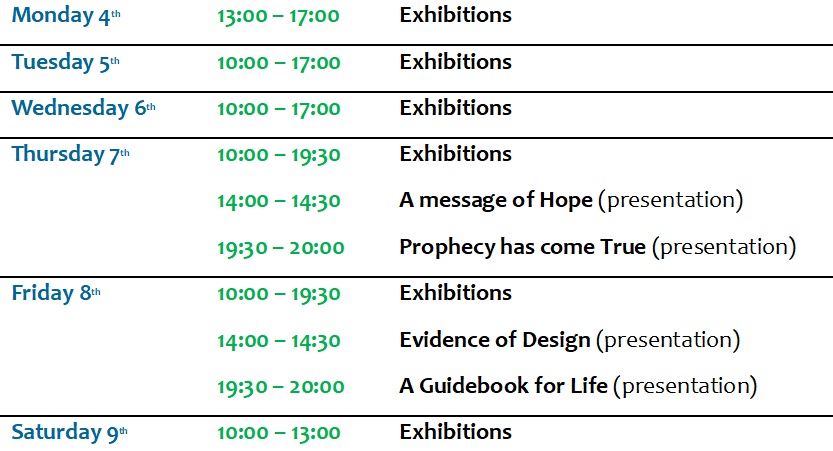
Join us for a presentation on this subject in Pontlliw Village Hall, on 14th June at 10.30am, God Willing

A Taste of the Kingdom

As part of The Lord’s Prayer we say, ”your Kingdom come, your will be done on earth as it is in heaven.” These were Jesus’ words when his disciples asked him to teach them to pray. Do you ever wonder about God’s Kingdom? For most people with a belief in God, ideas about life after death are a vague concept involving heaven, pearly gates and things which are better described as superstition rather than a Biblically founded belief.

Jesus spoke about God’s Kingdom. In fact, the Gospel can be summarised as “the things concerning the kingdom of God and the name of Jesus Christ” (Acts 8:12). Many of the parables that Jesus used revealed information about the Kingdom
of God which will be on the earth.

When we believe in God and we want to understand what His plan is with the earth that He created, it is better to use His Word to us (the Bible) than to rely on traditions invented by people.

Jesus told many parables about the Kingdom of God and described many aspects of what it would be like. The prospect of being in the Kingdom of God is a major part of the hope of Christians. The Bible speaks of a time where there will be an absence of death, pain, injustice and inequity with no pain and sadness.

We are having a presentation about what Jesus says about life in the Kingdom and how it has an impact on this life now. If the prospect of God’s Kingdom doesn’t appeal to us now, how is it even possible to look forward to it or for it to have an impact on the way we live our lives today? Come and find out more about what Jesus says about this.

Join us for a presentation on this subject on 4th May at 2.00pm, God Willing
at 110 Pontardulais Road Gorseinon SA4 4FQ

Jesus will sit on David’s Throne

Why does the first verse of the New Testament introduce the Lord Jesus as the son of David and the son of Abraham?

“… the genealogy of Jesus Christ, the son of David, the son of Abraham” (Ma􀆩hew 1:1)

God made key promises to David and Abraham about Jesus in the Old Testament. David, who showed his faith as a youth against Goliath, became Israel’s king and built a palace in Jerusalem. He wanted to build a temple for God, but God
instead promised him:

“I will set up your seed a􀅌er you [have died] … I will establish the throne of his kingdom forever. I will be his Father, and he shall be My son” (2 Samuel 7:12-14)

This was partly fulfilled in David’s son Solomon, who became king and built the temple. However, Solomon did not reign forever and was not God’s son, pointing to a greater future fulfilment in Jesus. When Mary was pregnant, an angel told her:

“the Lord God will give Him the throne of His father David … and of His kingdom there will be no end … that Holy One who is to be born will be called the Son of God.” (Luke 1:32-35)

The complete fulfilment of God’s promises to David will be when Jesus returns. Jesus will reign from David’s throne in Jerusalem, his father is God and he is a descendant of David (through his mother Mary). We are also told that he will reign forever. This confirms that the special descendant promised to David would be Jesus. The wonderful message for the future is that Jesus will be King from Jerusalem, the same place where David reigned!